Skip to content
Skip to content

Attic Insulation

Attic Insulation Installation and Replacement in the Bay Area

Old or damaged attic insulation is one of the most common reasons Bay Area homes run up high energy bills.Rywen starts with a thorough inspection before recommending anything – and every installation is followed by a verification visit before we issue your warranty. For homes that run hot in summer, a radiant barrier can lower attic temperatures further, and our insulation savings estimator gives you a rough sense of scope before you call.
Free Inspection
Same-Day Estimates
In-House Crew
No Subcontractors
What Homeowners Experience

When Your Attic Insulation Is No Longer Doing Its Job

Attic insulation breaks down over time from age, moisture, rodent activity, and settling. When it stops performing, you feel it in your home and see it in your utility bills. The problems homeowners contact us about most often include:
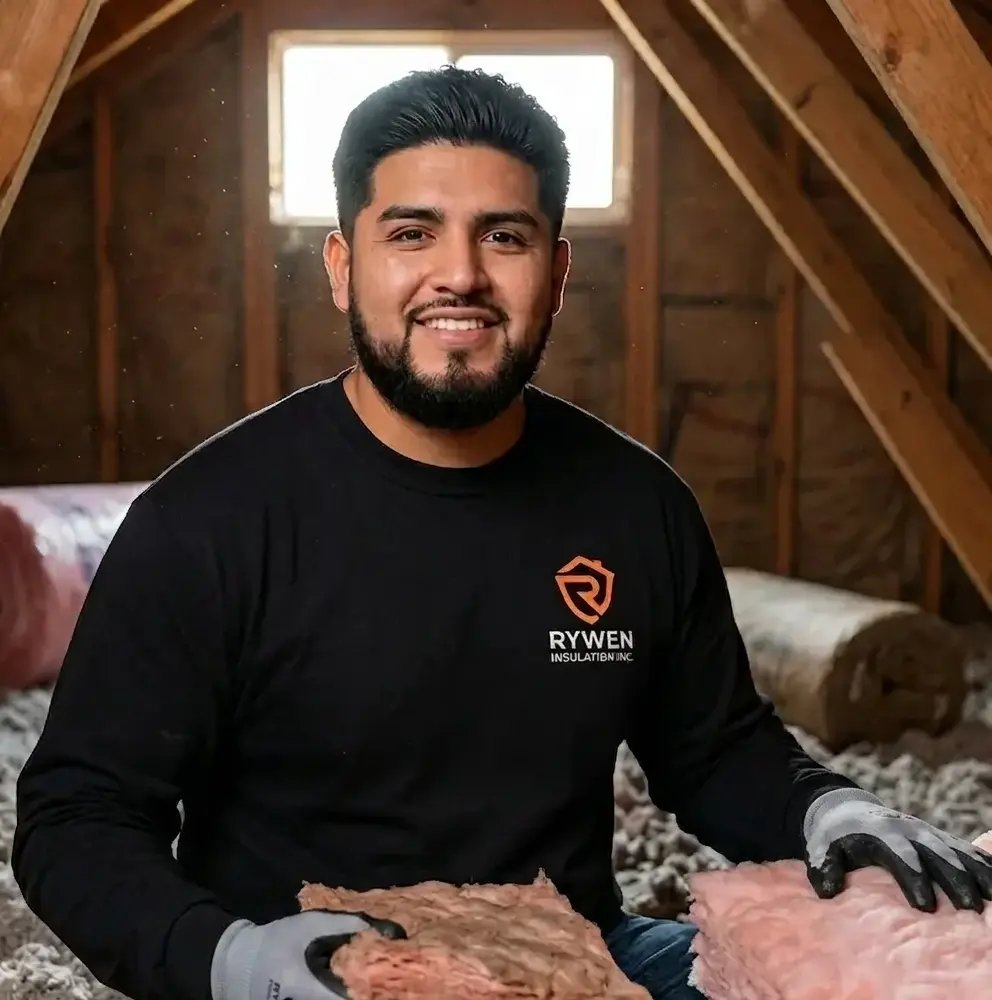
Rywen insulation technician holding fiberglass insulation material in attic
Materials We Use

Insulation Types We Install

We install the material that fits your attic design, accessibility, and energy goals. All installations are sized to California energy code standards – typically R-38 to R-49 for Bay Area attic applications.

Blown-In Cellulose

Made from recycled paper fiber, treated for fire and pest resistance. Excellent coverage in hard-to-reach spaces and irregular attic floors.

Blown-In Fiberglass

Loose-fill fiberglass that settles into gaps and achieves uniform depth across large attic areas. Long-lasting and non-organic.

Fiberglass Batt

Pre-cut blankets sized for standard rafter and joist spacing. Used in accessible attic areas and as part of mixed-material installations.

Rigid Foam Board

High R-value per inch. Used at specific locations – attic hatches, knee walls, and areas where space is limited.

Mineral Wool

Fire-resistant and moisture-tolerant. Maintains performance in humid attic conditions and around heat-producing fixtures.
The Rywen Approach

A Complete Attic Insulation Service - From Removal Through Final Inspection

Rywen handles the entire process in-house using our own trained crew. There are no subcontractors, and the same team that inspects your attic is the team that performs the installation. We do not recommend replacement until we have measured your current insulation levels and documented what we find. Many homeowners pair attic work with crawl space encapsulation to control moisture across the whole home.
Rywen technician conducting final inspection after attic insulation installation
How It Works

How the Attic Insulation Process Works

We built this process because homeowners told us they felt left in the dark by other companies. You know exactly what is happening and why at every stage.

step 1

Free Inspection

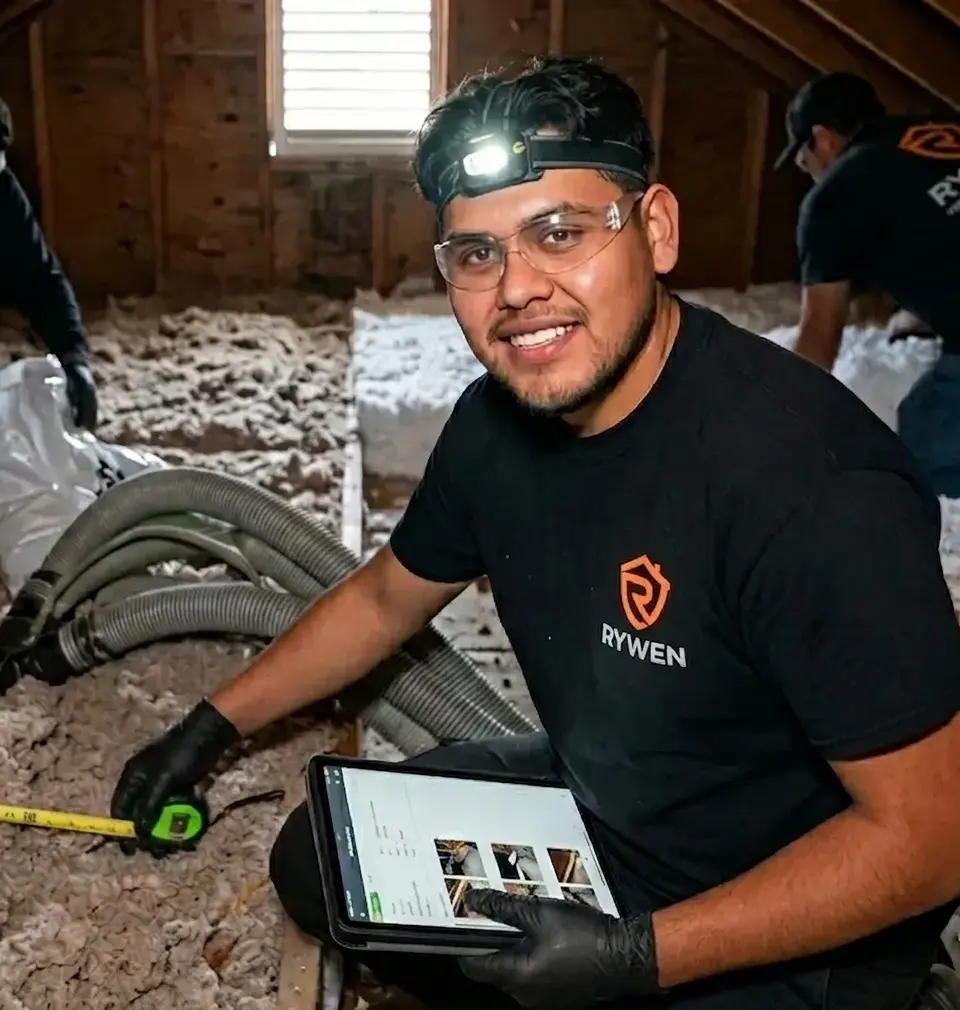
Axel inspects your attic for 40-60 minutes, measuring R-value, checking for moisture or rodent activity, and documenting everything with photos. You receive a written report.

step 2

Written Estimate

Same-day pricing based on what we found. We explain what material is recommended and why, and outline exactly what the work includes.

step 3

Removal (If Needed)

If existing insulation is contaminated or too deteriorated to cover effectively, we remove it safely before any new material goes in.

step 4

Air Sealing

Before insulation goes in, we seal gaps around plumbing, electrical, and HVAC penetrations to prevent conditioned air from escaping into the attic.

step 5

Installation and Verification

New insulation is installed by our crew. After completion, we verify R-value and schedule the follow-up inspection before issuing the warranty.

Rywen Insulation crew team standing in front of company vehicles
Common Questions

Attic Insulation Questions We Hear Most Often

Is the inspection really free?
Yes. There is no charge for the inspection or the written estimate. We spend 40-60 minutes in your attic documenting conditions and providing a clear report. You decide what to do with that information – there is no obligation.
We measure it during the inspection using a probe and compare it against California Title 24 standards for your climate zone. Most Bay Area homes are in Climate Zone 3, where R-38 is the minimum and R-49 delivers meaningful additional benefit.
We install blown-in cellulose, blown-in fiberglass, fiberglass batt, rigid foam board, and mineral wool depending on your attic’s design and your energy goals. We recommend the right material for your specific situation.
Quality insulation properly installed in a protected attic can last 20-30 years or more. Insulation that has been exposed to moisture, compressed over time, or damaged by rodent activity may need to be replaced sooner.
Not always. If existing insulation is in reasonable condition, blown-in material can often be added on top. If the existing material is contaminated or saturated, removal is necessary first. We make this determination during the inspection.
In most cases, yes. Replacing insufficient or damaged insulation with properly installed material at the correct R-value reduces the load on your heating and cooling system. The reduction varies depending on your home’s size, construction, and how underperforming the old insulation was.